"Hi, can I have three Pepsi's and something ornate by William Blake please? Just ring the buzzer, I'll come down."


 I watched Lost in La Mancha the other night, a documentary about Terry Gilliam's attempt to bring his version of Don Quixote's story to the big screen - in what was ultimately a very appropriately titled "The Man who killed Don Quixote." Gilliam does not endear himself to everyone, that's for sure, but it was sad to see something that held so much promise get gradually dismantled into a few carton boxes and insurance claims. I also learnt that the first assistant director is actually a project manager.
 The South African movie distribution system is continuing to uphold the lofty standards we expect of it (sarcasm intended). There are so many instances of good movies that don't reach our screens apart from showing at the odd festivals, if at all (e.g. Oldboy and 3-Iron), or disappear, like Serenity which was pulled after big banners and posters trumpeted its release. I actually don't know whether to blame the distribution system for its lack of imagination or the viewing public for theirs. I also don't know whether seperating "art" movies from "blockbusters" is helpful - it is certainly not contributing to the cause of exposing people to a wider range of film making styles and more than three storylines. (Of course, showing them together won't mean they get watched.)
"I never meant it as racist in any way, that is not how I am or how I was brought up. I did not say that black people should vote only for other black people. I said black people must vote for one another because I feel they ought to support their own people better."Also on IOL, an article identified Zayn Nabbi as one of Survivor South Africa's contestants. He recounted some reasons why he thinks he got selected by the panel, including:
"They asked me what pisses me off? And I said 'seeing six white people sitting on a panel and judging whether I go on to a show. Where is your transformation and demographic representivity?' I think they were all gobsmacked with a 23-year-old upstart telling them what to do."The last thing was a chain-email I received today entitled Why Africans can't be Terrorists and, in obvious reference to the recent Heathrow scares, listed ten reasons like: "We are always late; we would have missed all 4 flights" and "Pretty girls on the plane would distract us" and "We would talk loudly and bring attention to ourselves."
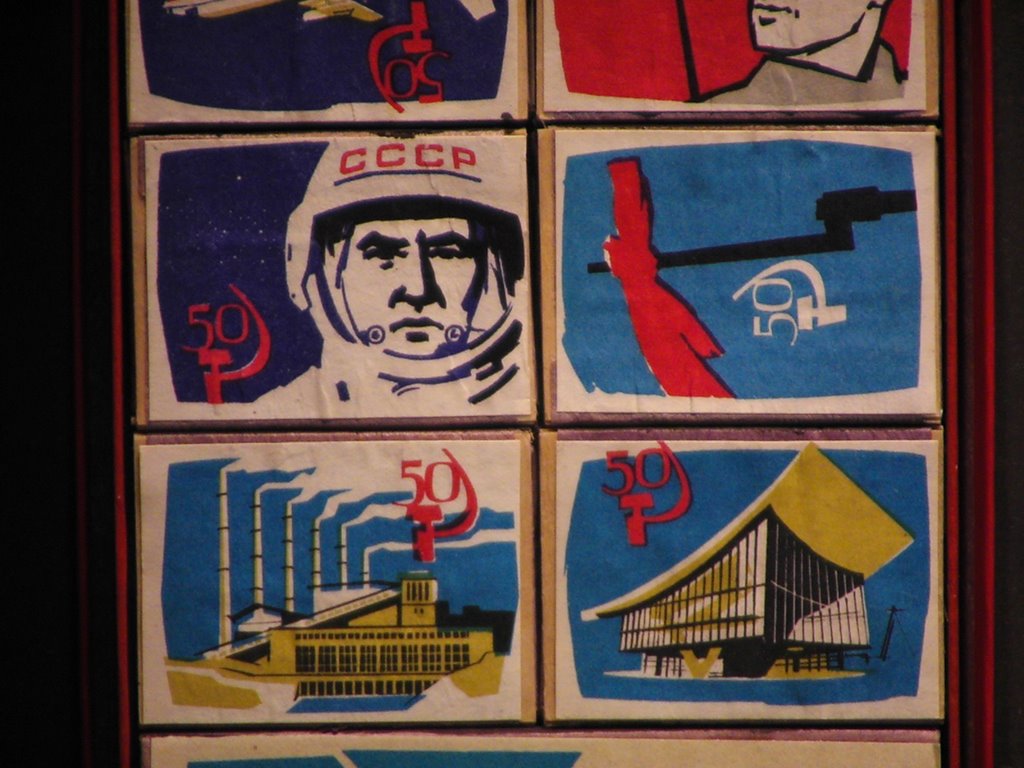
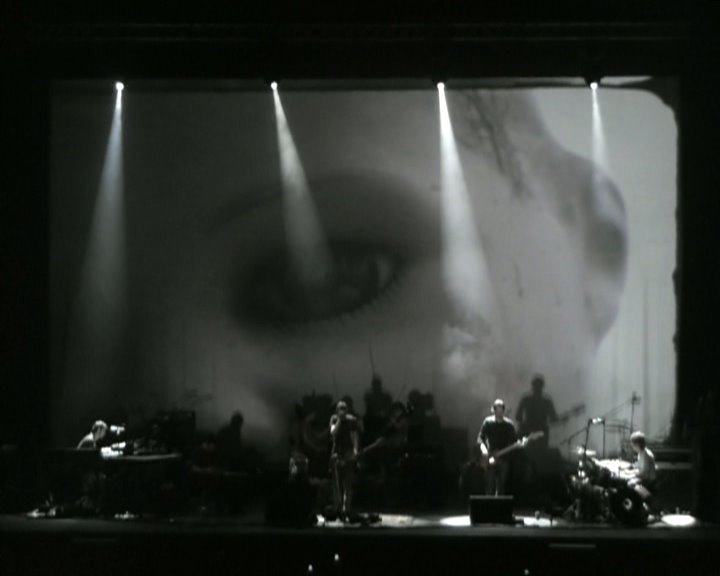
Sigur Rós on stage, playing live, is powerful. The music drifts between beautiful, slow melodies using Jónsi Birgisson’s voice to full effect, and loud cathartic moments of voice and instruments merging into a just as beautiful synchronised noise. This is not an evening of easy listening, thank god, this remains (post-)rock after all. The bulk of the set comprised songs from Takk… with one or two older songs thrown into the mix. Much has been made about Jónsi playing his guitar with a bow, and I thought it was hyped up like the “Hopelandic” lyrics issue, so I was pleasantly surprised to see he plays with the bow most of the time and it is crucial to what they are doing. It creates a unique sound, which is immediately recognisable as a Sigur Rós sound while providing a strange spectacle as he needs to slide to and fro it in the same way a violin player does, while playing chords with the other hand.
Jónsi always seemed very shy in interviews. On stage, the few times he spoke between songs, he proved himself to be the high priest of social awkwardness. Completely transformed when singing, he becomes fully immersed in the songs and his guitar playing. It seems a feature of the whole band, they get stuck in the music and only emerge for breath in-between songs. I was very interested beforehand to find out what the crowd is like at a Sigur Rós concert and whether they also start thrashing about when the music becomes heavier. I was amazed to find that everyone, including those in front of the stage, stand still and watch and listen throughout the show. When Popplagid was played as the encore and built up and built up and exploded into an incredible convergence of noise, with everyone on stage grinding down / bashing their instruments to within inches of their little anthropomorphosized lives, lights going crazy, the fans stood, heads raised, transfixed.
A band can go far with professional lighting. While the whole concert seemed very slick in terms of music, presentation and lighting it wasn’t in your face choreography. A thin curtain at the front of the stage with spotlights on stage shining against the backs of each band member projected their silhouettes against the veil during some songs. When this was combined with images project from the sound engineer’s booth on to the front of the curtain, and there was some synchronisation with the music, an amazing effect was created.
Another thing I liked was to position all four band members in a row on front of the stage, meaning that Orri Páll Dýrason was playing his drums on the right hand side, facing in. This has the effect of underscoring the importance of the drums’ contribution in their music, as you can watch him playing much better than having to look for a bouncing little head at the back. The back space was effectively taken up by Amiina playing strings and the brass band, as and when needed.
A few years ago a camera was still very much forbidden property in live venues. While they still are officially and it is printed so on the tickets, the ubiquity of cell phones and digital cameras means that dozens of little screens are continuously illuminated as people record snippets or take pictures, and this has become acceptable. I only taped the odd snippet as aiming, focusing, switching on and off (in the case of a video camera) becomes tedious and prevents you from becoming immersed in the concert.
So who’s next? Mono is high on my list, and it’s a pity they played too far away this time to combine with the others. Sigur Rós at least now has one tick against their name, but it won’t be the last one if I can help it.

